
"coffee brand China"
4000 article(s) found

The reasons for Starbucks' success in China due to Cafe Operation
Five reasons lead to Starbucks' success in China. If there is any company that should have failed in China, it is Starbucks. China has thousands of years of tea drinking history and strong tea culture. No one ever thought that Chinese people would drink coffee instead of tea. However, since landing in China 20 years ago, Starbucks has successfully opened more than 570 stores throughout

Why can Starbucks succeed in China?
Five reasons lead to Starbucks' success in China. If there is any company that should have failed in China, it is Starbucks. China has thousands of years of tea drinking history and strong tea culture. No one ever thought that Chinese people would drink coffee instead of tea. However, since landing in China 20 years ago, Starbucks has successfully opened more than 570 stores throughout

5 reasons Starbucks is successful in China
Five reasons Starbucks is successful in China. If any company should have failed in China, it was Starbucks. China has thousands of years of tea drinking history and a strong tea culture. No one ever thought that Chinese people would drink coffee instead of tea. Yet Starbucks has managed to open more than 570 stores since it landed in China 20 years ago,

Yum China and Lavazza plan to speed up store opening this year! Lavazza Cafe opens five a year.
I believe that everyone is no stranger to Yum China, such as KFC, Pizza Hut and other well-known catering brands are owned by Yum China. In 2018, Yum China saw unlimited business opportunities in the Chinese mainland coffee market, so it created the COFFii 喜悦 brand coffee, the main hand-brewed coffee market, in order to open up the Chinese mainland coffee market. After all, it has come into contact with hand-made coffee.

Foreign "national coffee" compete for the beach, who is China's national coffee?
Professional coffee knowledge exchange More coffee bean information Please pay attention to coffee workshop (Weixin Official Accounts cafe_style) Wen/Nicole Source: Retail Krypton Planet (ID: LS-KXQ) Almost all the world's national coffee has arrived, but the competition in China's coffee market has just begun. Who will be the potential stock of Chinese national coffee? Next Tuesday, February 26, Canadian National Coffee Brands

Daquan, a local coffee brand in China, is the largest coffee brand in China Starbucks or Lucky?
Professional coffee knowledge exchange more coffee bean information please follow coffee workshop (Wechat official account cafe_style) coffee, born with petty bourgeoisie feelings, but the coffee shop's romantic business is not easy to do, high rent, high quality, low unit price, but in the past two years, the smell of capital gradually touched this business. In only 90 days from January to March this year, more than 15 investment institutions have entered the coffee industry.

Local brands challenge Starbucks in the world's fastest growing coffee market
The rapid development of Delphi Coffee benefits from the rapid growth of Chinese coffee market. And the taste of the Chinese middle class is affecting the most nervous nerves of global coffee brands and producing countries. At the closing ceremony of the Qingdao International Coffee Exhibition on September 26, the latest research report released by the Colombian Coffee working Association shows that China has become the fastest growing market in the global coffee market for several years in a row.

How Starbucks develops Starbucks Marketing Model in China Starbucks in China
If there is any company that should have failed in China, it is Starbucks. China has thousands of years of tea drinking history and strong tea culture. No one ever thought that Chinese people would drink coffee instead of tea. However, since landing in China 20 years ago, Starbucks has successfully opened more than 570 stores in 48 Chinese cities. With this momentum of development
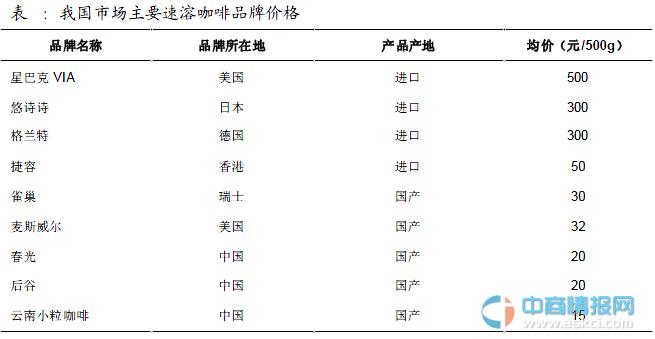
Analysis on the Market pattern and Development trend of China's Coffee Industry in 2015
Judging from the current competition pattern of China's coffee industry, in the field of instant coffee, domestic products of foreign brands are in a monopoly position in the middle and low-end market segments, and coffee giants such as Nestle and Maxwell have a market share of more than 80%. In the future, China's local coffee enterprises, represented by Gu Coffee and Chunguang Food, are in a period of transition from raw bean cultivation and rough processing to self-branded coffee products.

Starbucks faces Challenge Multi-Coffee Brands compete for Chinese Market
Multi-coffee brands compete for the Chinese market Starbucks faces challenges Starbucks is always a brand with no lack of topics. Recently, there are media reports in the United States, a Chicago woman sued Starbucks for $5 million because there were too many ice cubes in cold drinks. The news drew attention to Starbucks, which was widely questioned about its high pricing in China. There is more in one drink.

Starbucks faces Challenge: multi-Coffee Brands compete for Chinese Market
Multi-coffee brands compete for the Chinese market Starbucks faces challenges Starbucks is always a brand with no lack of topics. Recently, there are media reports in the United States, a Chicago woman sued Starbucks for $5 million because there were too many ice cubes in cold drinks. The news drew attention to Starbucks, which was widely questioned about its high pricing in China. There is more in one drink.
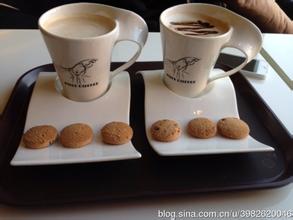
The popularity of China has led to the rapid expansion of Korean coffee in China-from the ups and downs of Korean coffee.
Headquarters control is not strong enough, single store default cost is low, stores close, franchisees run away, Korean coffee brands continue to storm, exposing the problem of insufficient management control under the rapid growth of enterprise scale. According to RET Rui Yide's "Research report on the Development trend of Korean Coffee Shop in China", Korean coffee brands mostly take joining or co-operation as the main expansion mode, in which coffee accompanies you.

Five reasons for Starbucks' success in China
If there is any company that should have failed in China, it is Starbucks. China has thousands of years of tea drinking history and strong tea culture. No one ever thought that Chinese people would drink coffee instead of tea.

Costa Coffee: Late birds don't eat insects?
Professional barista exchanges, please pay attention to coffee workshop (Weixin Official Accounts cafe_style ) focusing on the research of coffee, tea and other industries from the media cafe door and Meituan Dianping Research Institute recently launched the first phase of the beverage industry data report, the report shows: in 2016, the number of cafes in China exceeded 100,000. Competition is fierce, shuffling speed is intensified, it is easy to open a shop and difficult to make money. Become a cafe

Pu'er Coffee won the top 10 agricultural regional brands in China.
The results of national well-known brand establishment demonstration zone construction and 2016 regional brand value evaluation were released in Beijing a few days ago. Pu'er coffee entered the 2016 regional brand value top 100 list, the only coffee selected, and won the seventh of the top 10 agricultural regional brand values with 11.136 billion yuan. The cultivation of coffee in Pu'er City began at the end of the 19th century and its industrialization began in 1988. At present, coffee noodles are grown in the whole city.
Development of Coffee Culture in China
In the process of globalization, Western culture has also spread in China. Take coffee culture as an example. In the earliest days, drinking coffee was a western culture, but now it is already a global culture, but each region still has its own unique characteristics. Take espresso, for example, it has established its own brand and formed its own unique coffee culture in China.
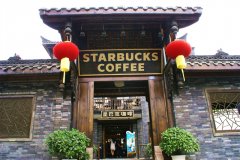
Five reasons for Starbucks' success in China
If there is any company that should have failed in China, it is Starbucks. China has thousands of years of tea drinking history and strong tea culture. No one ever thought that Chinese people would drink coffee instead of tea. However, since landing in China 20 years ago, Starbucks has successfully opened more than 570 stores in 48 Chinese cities. With this momentum of development
Refuse extensive growth London Bridge Coffee advocates intensive farming Market
China's coffee market has shown a strong growth momentum in recent years. Statistics show that the number of coffee shops in China has grown from more than 10,000 to more than 30,000 in the five years from 2007 to 2012. Especially in first-tier and second-tier cities, coffee drinking has been integrated with fashion and modern life, coffee consumption is increasing, and the coffee market is also expanding. This continues from many coffee shop chains

Starbucks faces challenges: multi-coffee brands compete for the Chinese market, coffee is very popular
Multi-coffee brands compete for the Chinese market Starbucks faces challenges Starbucks is always a brand with no lack of topics. Recently, there are media reports in the United States, a Chicago woman sued Starbucks for $5 million because there were too many ice cubes in cold drinks. The news drew attention to Starbucks, which was widely questioned about its high pricing in China. There is more in one drink.
China and South Korea join forces to dominate China's coffee industry
In March 2012, coffee brand caffebene officially entered China and joined forces with China Enterprise Investment Group to establish Coffee Management Co., Ltd. South Korea dark horse, leading the Asian mainland, implementing the global strategy coffee accompany you CaffeBene is the leader of the Korean coffee chain industry, South Korea's local market share is 70%. In April 2008, the first door was opened in Qingtan Cave, South Korea.